DUONG LAM VILLAGE: RUSTIC SOUL REMAINS IN A TOURIST SPOT
Over-familiar with ancient villages yet? While many ancient villages are loved for its historic sphere, as a tourist attraction, it gives off an unhidden vibe of commercialization. Visit Duong Lam village on an off-season tour of early summer to find the authenticity of a village – the rustic old soul still shines
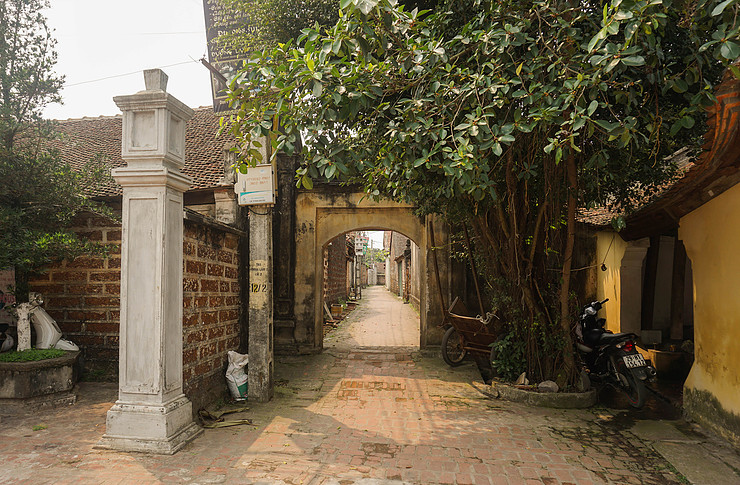
What is the most powerful drive to make one get off their butt to travel? For many cases, it is brilliantly refreshing to see new things. From the Memoirs of Geisha -like Gion Street (Japan) to the spiritful Jiufen old street in Taiwan, to the subtle yet vivid Hoi An ancient town, etc ancient villages hold such a special place in the heart of a traveller. It reminds us not only of the beauty of different cultures but also the everlasting rhythm of life that has been beating for thousands of years. However, having been to all of these places, I can not help but feel a huge similarity: souvenir shops, locals’ pigeon English, clothing rental stores, beautiful Instagram corner. Since most of the activities are shopping and taking pictures, despite being in different places, my experience remains repeated. Feelings are grounded by the action of selling and buying and stuck in camera frames. It is hard to see what we originally want from an ancient town: how differently the locals live from us, how their ancestors have lived before, how they keep up with the tradition. The genuineness is vague.
In Duong Lam Village, people keep their normal life of typical Vietnamese rural villages as if tourism hadn’t come.
Street stores and street vendors are homespun which is seemingly meant for locals: There is a cheesy homemade Boba shop, a barbershop decorated with dusty photos of K-POP idols from 10 years ago, a small motorcycle repair shop with every kind of tools spread out in the front yard, etc
People talk to each other in a leisurely pace. They greet each other cordially. They joked, they laughed, and laid-backly spend the day.
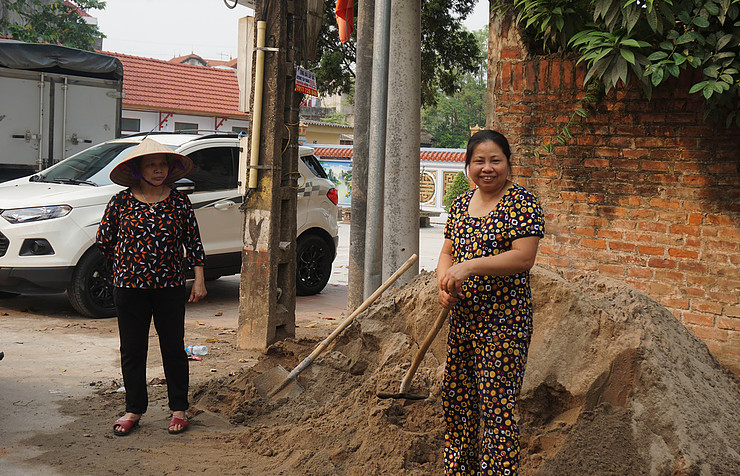
Owners of the restaurant we visited are restaurant owners for the weekend. In weekday, they are teachers.
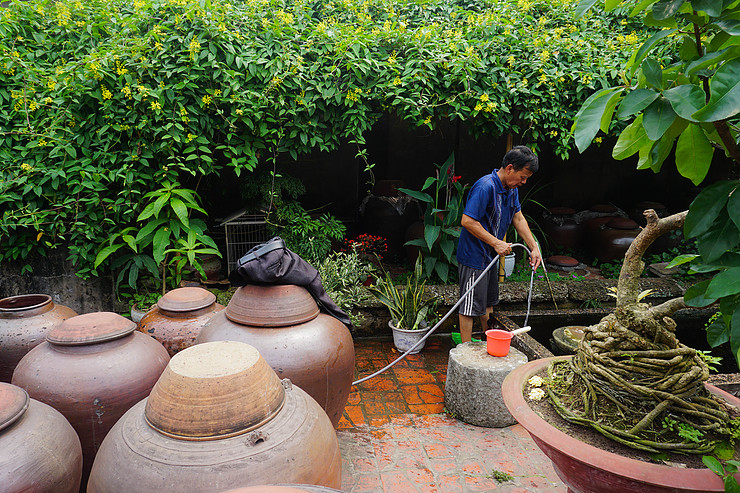
The Ancient house of Mr….is popular to tourist. And yet while 6 or 7 strangers were visiting their house and taking pictures , the owner would still relaxedly clean his fish tank
People still sit around under the communal house to have a cup of tea and a mid-day chat. A local man is eating betel on the street. No people were there when we visited one of their temples. They leave their temple empty without any worries and enjoy an “inner circle” activity while lots of strangers are wandering around in the zone. The rhythm of life is beating casually as if there were no interruptions by tourists. Rather than a tourist attraction, Duong Lam is still a dear home for its family members to be comfortable at any time of the day.
Lovely couple taking wedding photos, foreigh visitors, hope they don’t be offended by the smell of cow dung on the way. They are actual cows doing their noble work in the field, not some poor animals often used for children to ride on and take pictures.
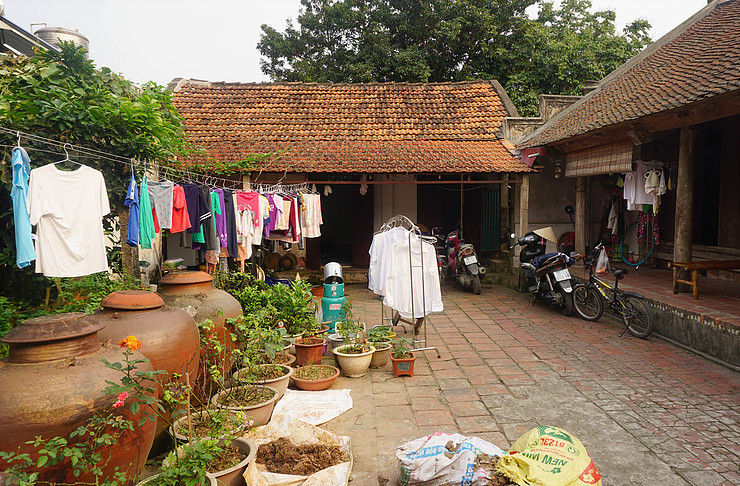
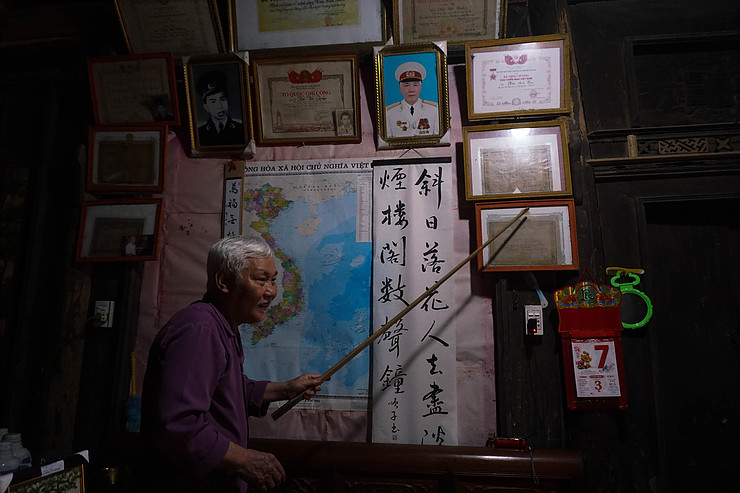
Of course, Duong Lam is a tourist attraction, and many signs are showing it’s well-prepared for tourist: Lots of street vendors sells souvenirs and cuisine. Owners of local houses often greeted you warm-heartedly while readily providing you interesting information about their house like a professional tour guides. Of course, the lives of the people have changed since the emergence of their village as a tourist attraction. I believe they’re all well aware of their life’s being interesting in the eyes of outsiders. Perhaps, it is a lovely coincidence that Vietnamese traditional culture gives much credit to hospitability and interpersonal connection, which makes us concern less for our daily life being interrupted by strangers. I wonder if this innocence is why Duong Lam can still keep its genuineness. Or else, it could be attributed to the authority’s well-thought tourism development plan, or else, in a more simple way of thinking, let’s be grateful that tourism and commercialization haven’t touched here deeply yet.
 Intrigue Normie