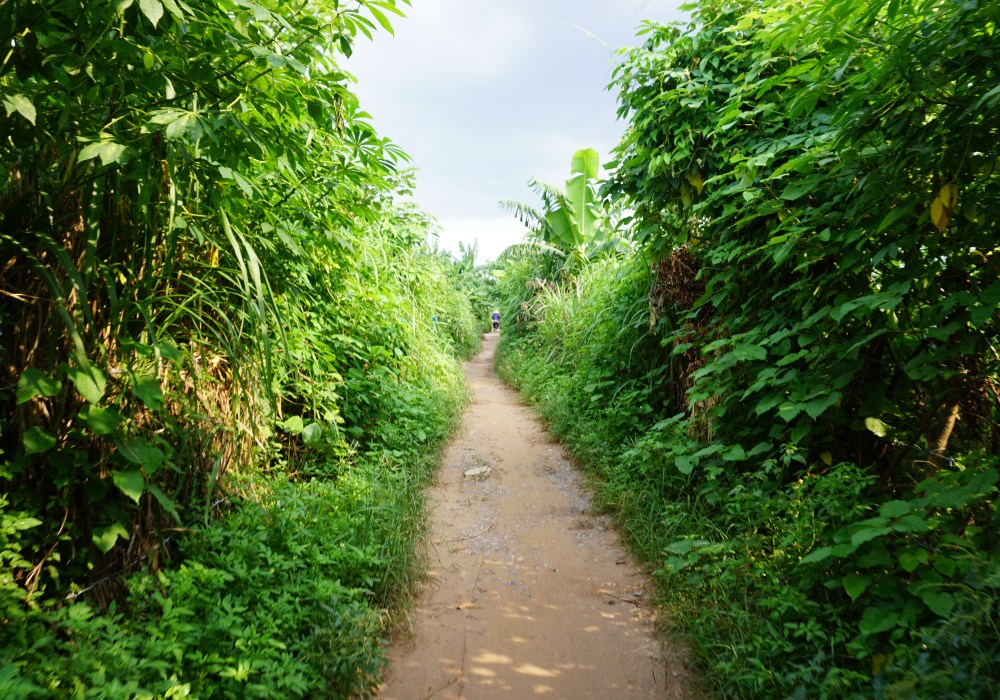
Getting off the beaten track – A visit to Banana Island
A small island in Hanoi where people live in harmony with nature in an old rural lifestyle
Banana Island is a rare place that I find less familiar with Hanoians than tourists. Some of my foreign friends mentioned about the island, yet my friends, even my parents who claimed to be living in Hanoi since birth did not know about it. Also, It got the name “Banana Island” by tourists. Its Vietnamese name is Red river’s middle island, a tedious name which could be easily lost in bunch of other Red river’s alluvial grounds. Moreover, a quick search on google shows that: there is only 1 Vietnamese travel review for this place, which is the equivalent to the number of English review. So from those few travel reviews, here is some of my impression about the island:
- The way to get there is fairly sketchy and dangerous.
- It is full of nature
- Residents are poor people from all walks of life

Therefore, I regarded a visit to Banana Island an adventure, an authentic experience. It would be venturesome with a lot of new things to see.
I and my Italian friend, Valentina decided to go on an adventure to Banana Island on a summer afternoon. We were well-prepared for the wilderness with mosquito repellent cream, cap, water, and of course, our cameras. It was Valentina’s third days in Hanoi and by then she must have gotten used to Hanoi’s insane traffic. She was relaxedly sitting behind me on my scooter on the way to Long Bien bridge when it started to rain heavily. But fortunately the rain did not last long, the sky cleared up after 15 minutes, and our adventure continued.
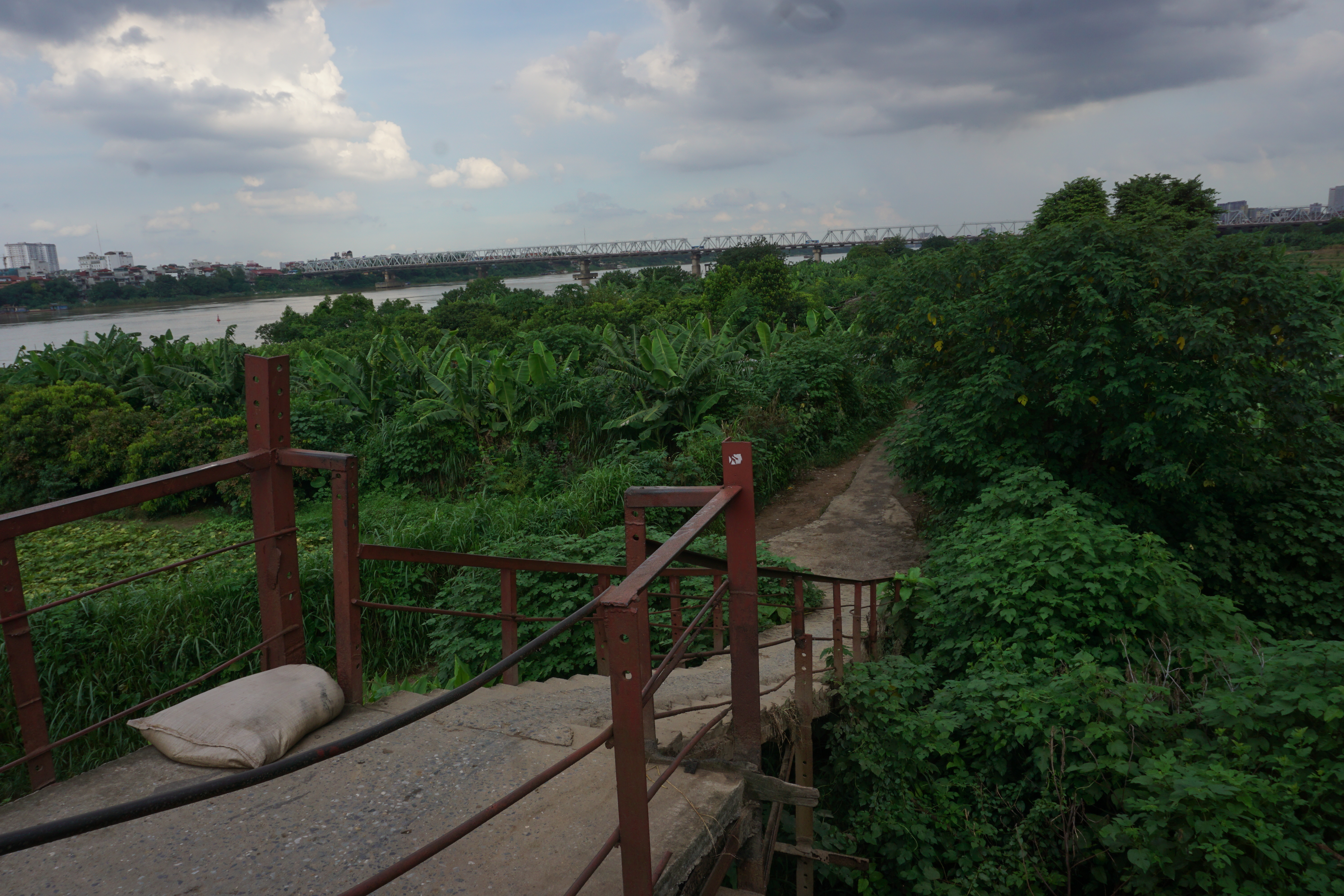
To get to Banana Island: Park your scooter at Long Bien Station, Tran Nhat Duat street, walk until the middle of the bridge, there will be a steep pathway leading you to the Island below.
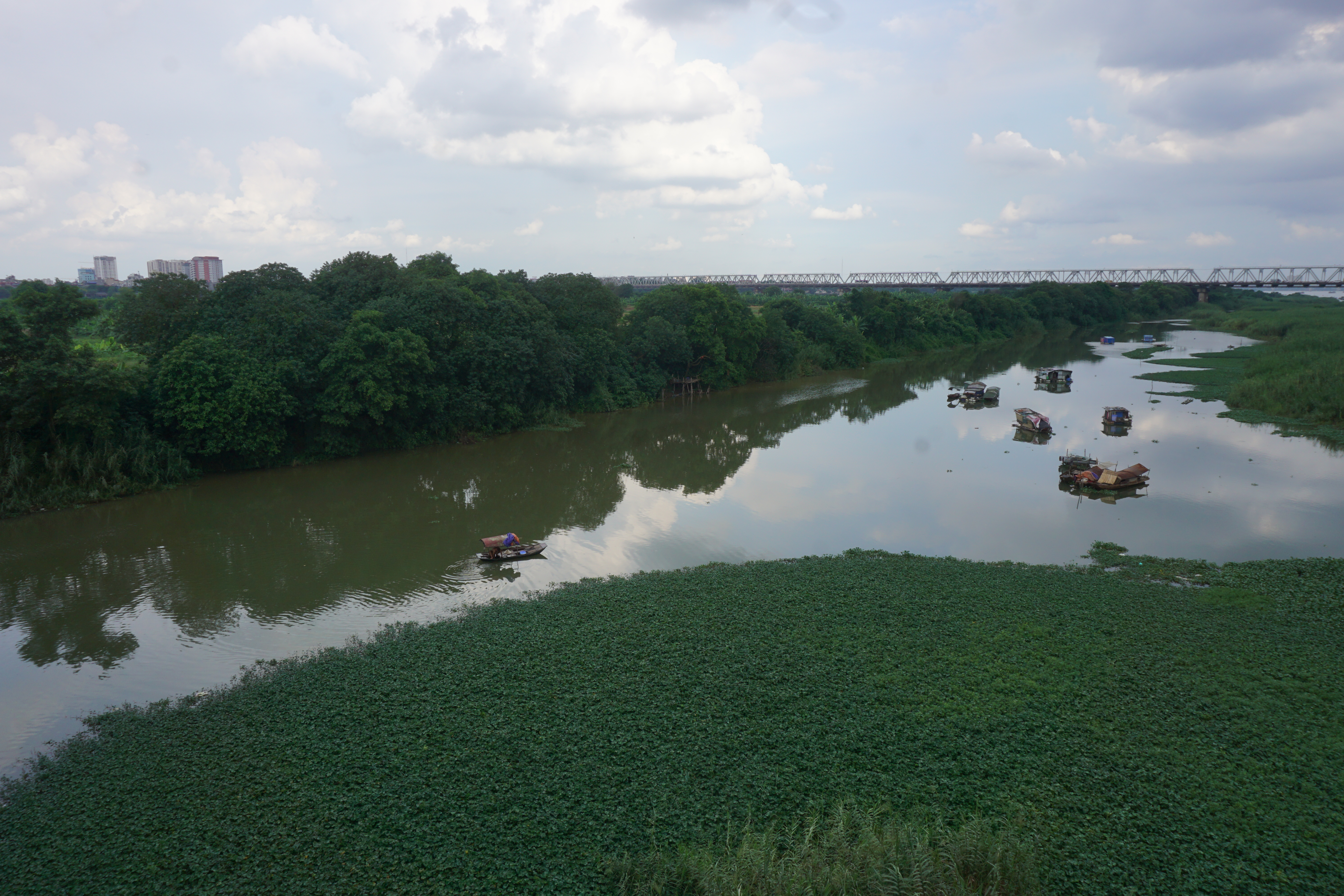
Hanoi refreshed herself after rain. Long Bien bridge welcomed us with such a calming atmosphere. There was no rainbow but the mild sunlight over the area was lovely so we were in good spirits. As we got closer to the middle of the bridge, Banana Island slowly came into sight. Looked from Long Bien bridge, the island amazed us with carpets of water fern floating on the river adorned by some wooden boats. Far away, different green shades of banana trees and crops mingled with each other. The naturalistic reminded me of the childhood drama “Dat rung Phuong Nam”. Overhead, dark cloud was covering the sky as if it was about to attack the city, yet we were convinced by the cloud’s direction that it was not gonna rain on the island, so we decided to keep on anyway.
The only way to go down to the island is a steep pathway which despite being little challenging for foot walkers, is relatively dangerous for scooter riders. Yet they did it anyway. Two people, an old auntie and an old uncle, were strenuously pushing their scooter to climb up the slope, some combs of banana were secured at the backseat. After them, another old uncle while braking intensively plunged down the slope . People have to wait in line to use the slope.
“Just a while ago, I belonged to the city’s hustle and bustle, and now, I am standing here, the air is fresh, my anxiety is hanging out somewhere else, I am looking at Long Bien bridge and Chuong Duong bridge from under.”
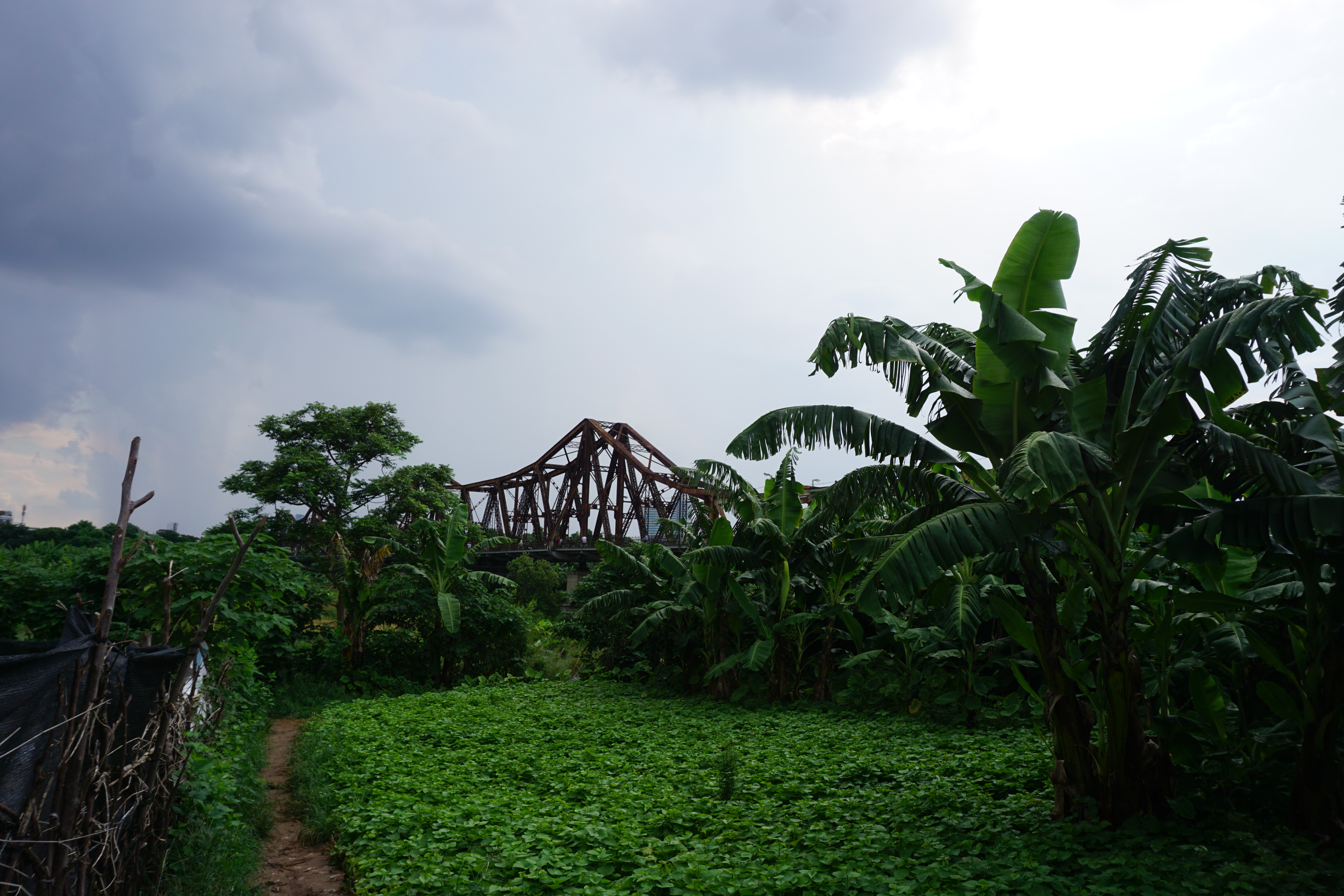
The “main road” connecting the slope to the far end of the island is long and winding. There was only a concrete house that crossed our sight making me wonder if all of the inhabitants lives in tents. To the right of the road, on the riverbed, a huge awning utilized for parking slot spots on. Judging from the number of scooters, there must be more than 15 islanders. Islanders seem to rely on farming and horticulture to make ends meet. Behind bunches of banana trees standing along the island’s “main road”, there comes a spacious land where rice and flowers are grown. Standing there, you can see the sprawling city on the other side of the river. Those two sites give off such different vibes as if they were from two different worlds. I was thinking: just a while ago, I belonged to the city’s hustle and bustle, and now, I am standing here, the air is fresh, my anxiety is hanging out somewhere else, I am looking at Long Bien bridge and Chuong Duong bridge from under. Comfortably peculiar, I must say.
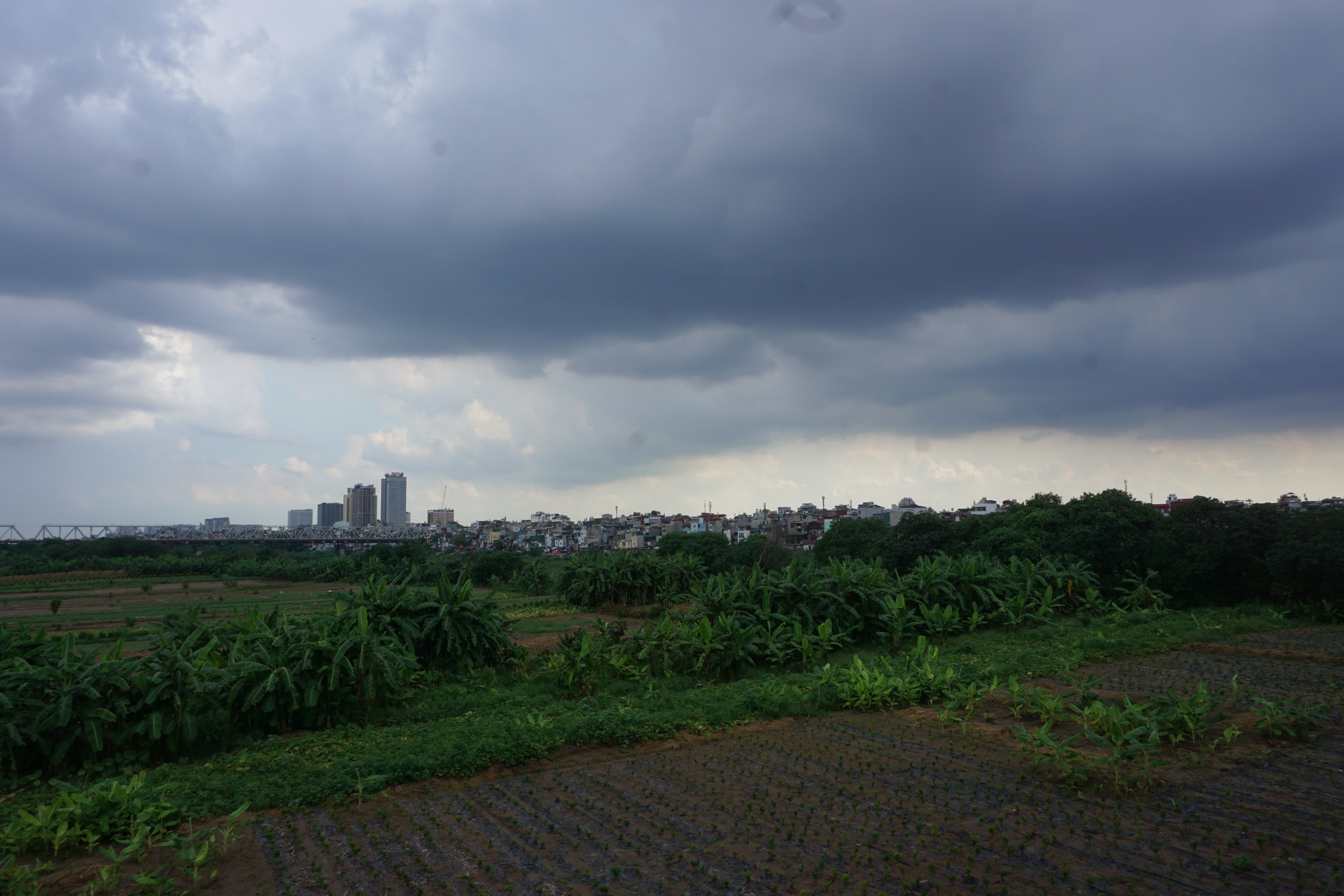
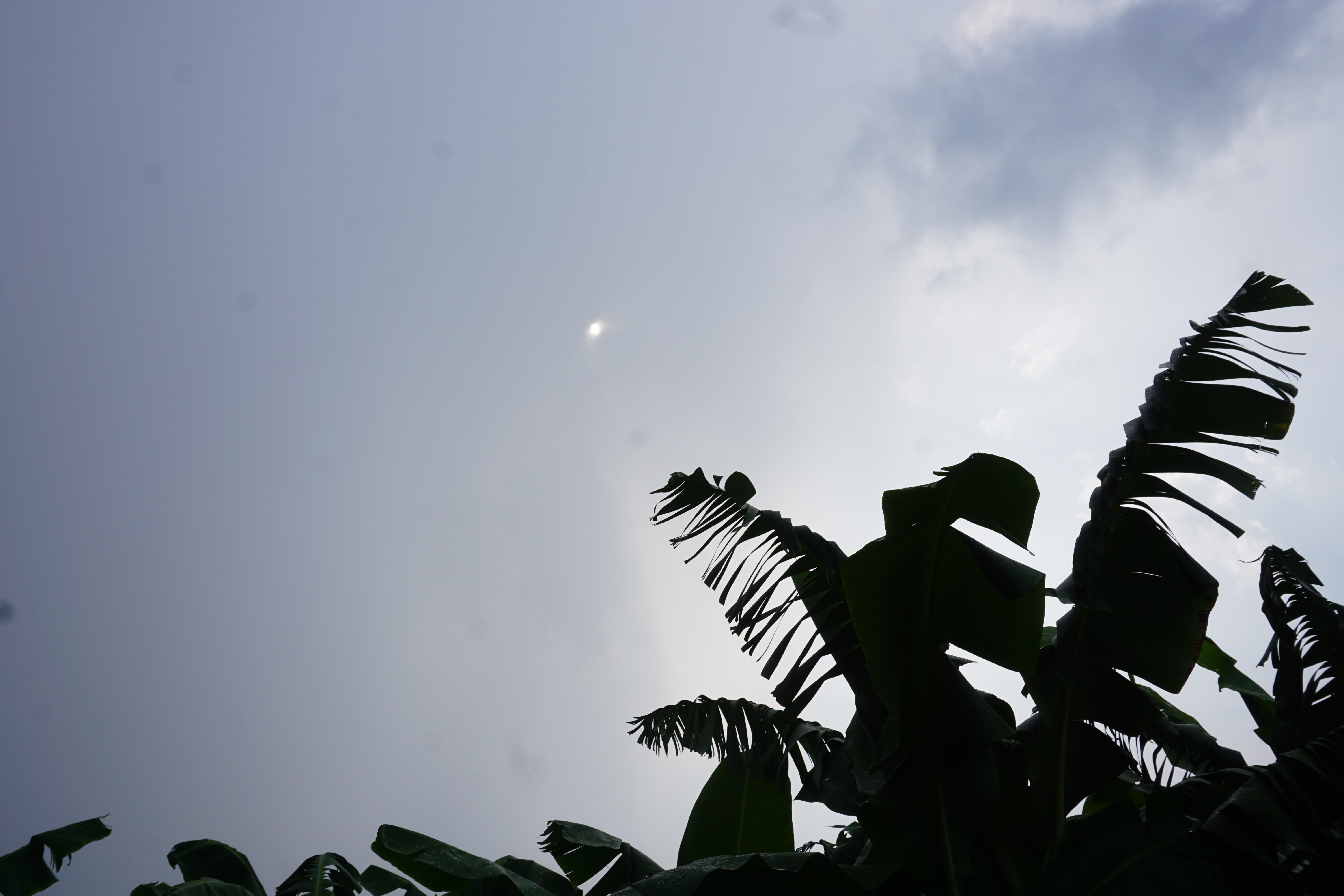
By then, our prediction was proven to be wrong as the rain started to fall, still, I felt strangely calm. We explored deeper into the “jungle” a bit. The fauna and floral are exceptional. Valentina noticed some butterflies with a strange polka dot pattern of black and indigo blue, in the rain, she still tried her best to capture photos of them. Nevertheless, the swift witty creature made it impossible for her.
We headed back home as the rain got heavier and it was unwise to use banana leaves as a shelter. I glanced at people resting right under Long Bien bridge where dusted plastic tarps were hung by makeshift and wondered how frightening it would have been to be under an iron bridge when thunder and lightning covered the sky. On the way back to Long Bien station, we saw the man who had climbed up the slope earlier, he was trying to sell banana in a corner of the bridge amid Hanoi’s summer downpour.
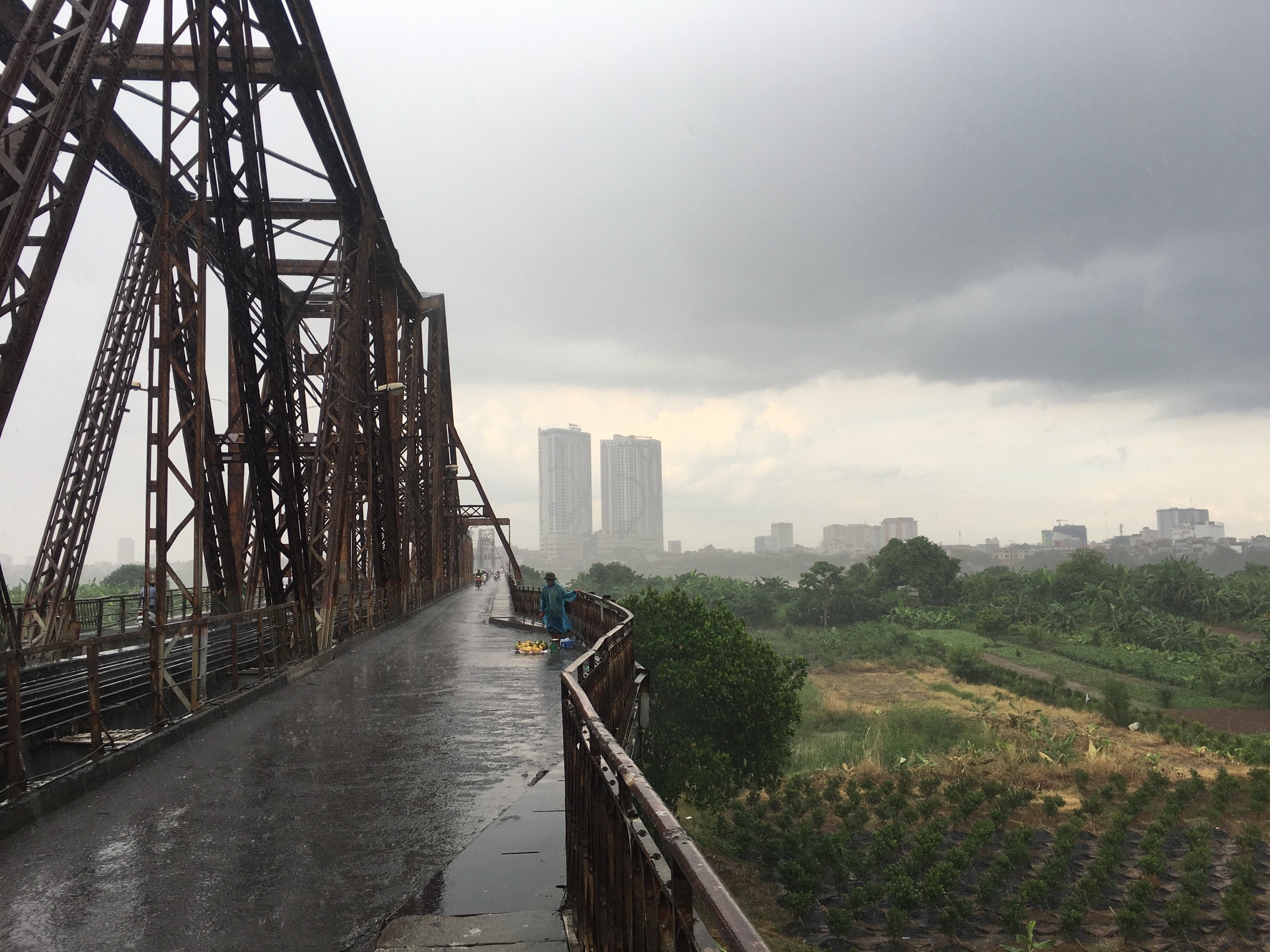
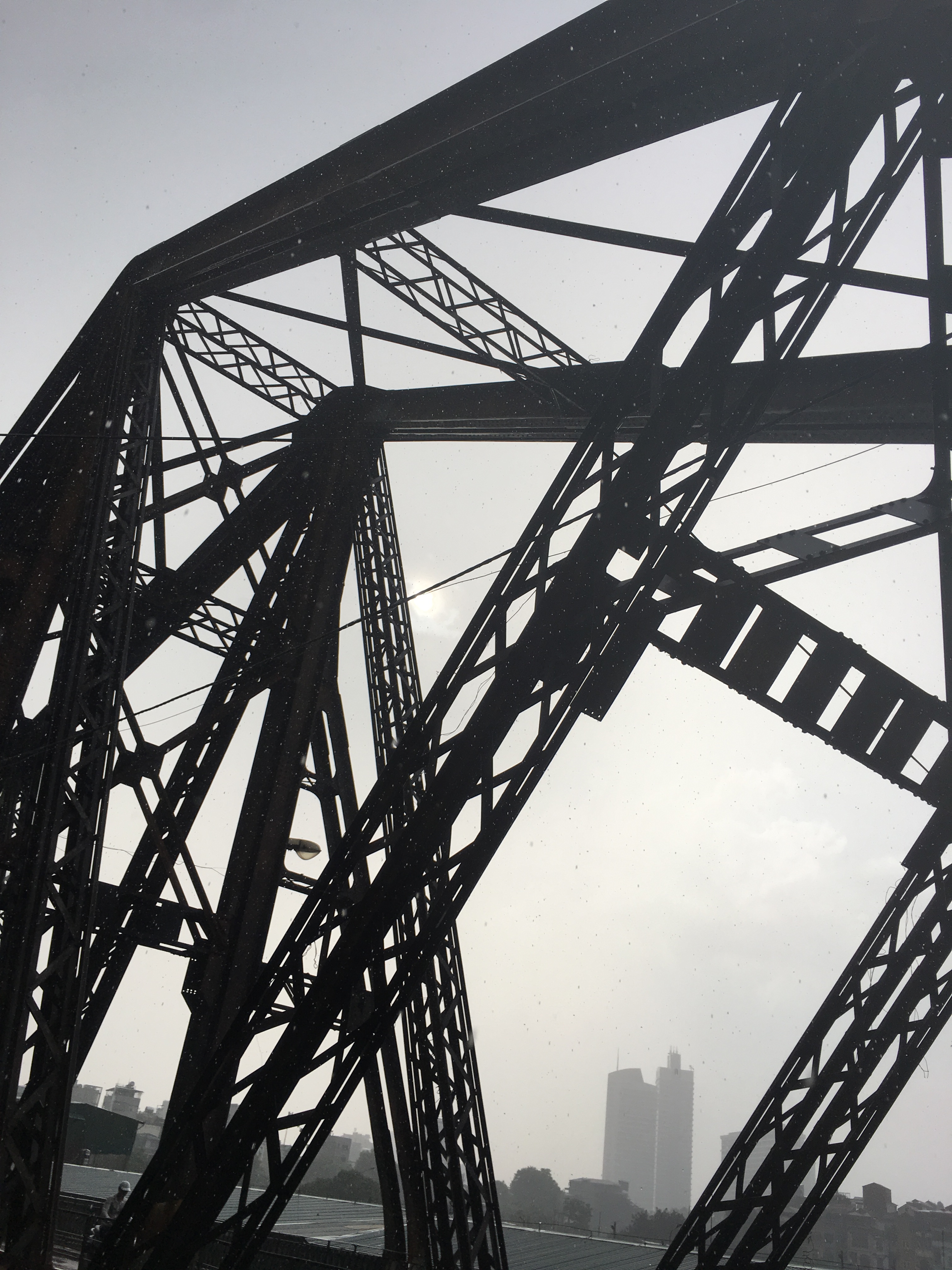
It was a short journey, there are a lot of things that we missed during this visit: we have not talked to any of the locals nor did we see with our own eyes any residents swimming naked in Red River. However, it does change my perception a bit. I thought the Island was a wild, somewhat dangerous place with poor residents. While it remains to be true, having been on the island and witnessed my anxiety fade away in the gentle arm of mother nature, a thought crossed my naive mind: this does not sound bad at all.
If you are hooked by the island, here are some interesting informations:
- It is the largest alluvial ground of Red River
- It used to be tourist attraction during French colonial area, in fact, it was the French who built the steep staircase making it easier for people to access to the island.
- It was left abandoned until the year 1911 when Hanoi Authority engaged in a massive cottage clearence, a number of residents who did not own family book moved to the the island to make ends meet
- Residents plant a wide variety of crops and flowers such as banana, corn, sweet potato and mulberry
- There is only one concrete house in the island, other islanders live in tents or boats
- A group of architects is having an ambition to turn Banana Island to the green lung of Hanoi. They want to fill the island with unique trees of northern Vietnam, create a biosystem that could bring back the sense of harmony between humans and nature to urban-dwellers, especially children who has few playgrounds and young adults whose life stuck in concrete box, who themselves forget what outdoor is.
Also, some tips for my wide-eyed wanderers:
- Protect yourself with suncream, mosquito repellent cream, cap, water and raincoat
- Do your timing right: it take 2 or 3 hours to explore the whole ground, and if you get back by around 6 pm, (and if the weather is nice), immerse yourself in the radiant sunset over Long Bridge or riverbed (as your choice).
- Take a rest in the vendor under the bridge: have some corns and listen to the owner’s stories (I did not because of the rain, but you should)
- Feeling totally blended with nature by joining the locals to swim naked in the river
Reference:
https://anninhthudo.vn/song-o-ha-noi/chuyen-ve-bai-giua-song-hong/796309.antd
 Intrigue Normie